We've had such an exciting morning I don't know where to start but it all needs to get out of my head into a post before I forget any of it!
The excitement came in the form of Joan; the Chair of the Horsham District Archaeology Group. I sent our village history group an email asking if they had any information on hedgerows in the hope they might send us a couple of old photographs; but they went above and beyond my expectations and the email was forwarded to Joan who replied with old maps, information about our area, results of her own local hedgerow survey and an offer of further help...so of course I asked if she would be interested in showing us a particularly old hedgerow...and she said yes!
Firstly we sat at our dining table and Joan talked us through the history of Southwater and surrounding area. Joan has been involved in digs which have produced evidence of iron age settlers within a mile of our house. Many North/South paths in our area also indicate a strong presence of the Saxons too.
On route we drove down a track towards Great House Farm which had a Victorian hedgerow running either side of it. There were lengthy sections of the hedge that had very few species growing.
The hedgerow we were taken to surrounded Jackrells Farm, the farmhouse was originally built in the mid 1400s and has a heart/shield shaped field adjoining it which is considered to be extremely old and possibly what's left of ancient woodland after assarting.
We parked nearby and as we approached the public footpath, before even stepping over the stile, Joan immediately spotted Wood Sorrel, Ajuga, Wild Garlic and Holly - all ancient woodland indicators. She went on to say that Primroses, Bluebells, Lords & Ladies and Honeysuckle are also ancient woodland indicators. Either side were well established coppiced hazel woods.
It was a beautiful, warm morning and because we were on such a quiet lane we heard and saw buzzards meowing overhead as we wandered along and talked about the hedgerow and history of the area.
Just today without stopping to measure out a section for proper surveying we spotted the following plants in the hedgerow - there were many we missed I'm sure:
Elder
Holly
Hazel
Field Maple
Hawthorn - Possibly the presence of Midland Hawthorn which has 2 seeds.
Blackthorn
Honeysuckle - we were shown how to suck the honey out of the flower!
Butchers Broom (very rare) - You guessed it, once used by butchers to make brooms!
Small Leaved Lime (which can no longer propagate from seed, so is extremely rare)
Sycamore
Oak
Dogwood
Traveller's Joy
Joan talked about so many different periods in history and areas of interest it was hard to keep up. Within a very close vacinity she mentioned seeing wild daffodils and wild raspberries which are also further ancient woodland indicators.
We walked back to the car via a different route and Joan highlighted the high banks either side of the lane and told us that it's a sign of a very old lane and that it has sunk through good old wear and tear. Joan then took us on a "car safari", as she called it, to find the saxon remains of Sedgwick Castle.
The information Joan gave us on the history of local roads and farms etc was an added bonus, the amount of knowledge simply mind-blowing and I'll be honest a massive distraction; BUT one we're very grateful for. We ended the morning feeling very blessed to live in such a historically rich and interesting area.
 |
| Wood Sorrel |
 |
| Bad photo but an ancient woodland grass, unable to identify just yet |
 |
| Ajuga |
 |
| Italian Lords & Ladies leaves? |
 |
| Stepping over Horsham Stone |
 |
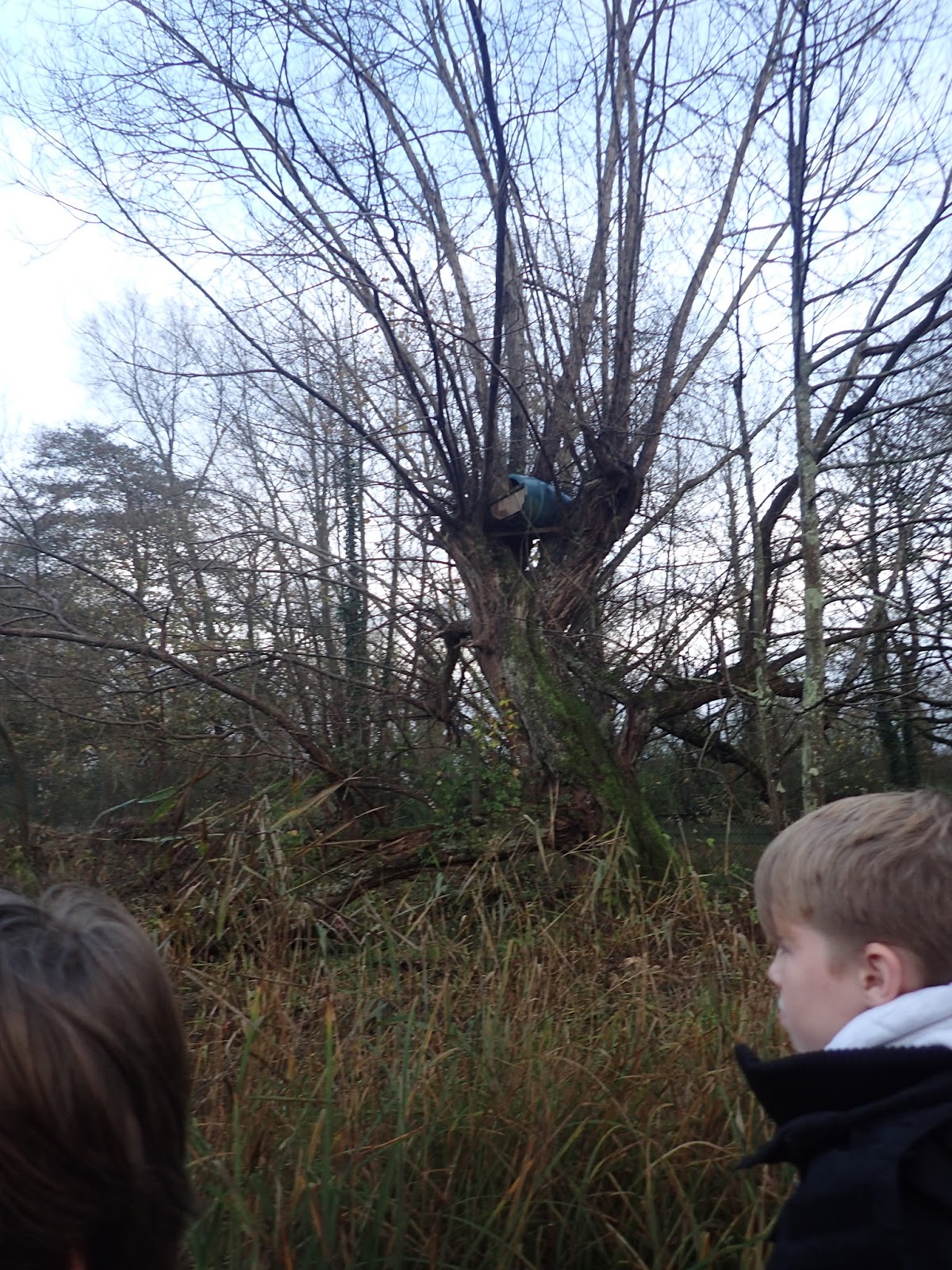
| Very old Coppiced Tree |
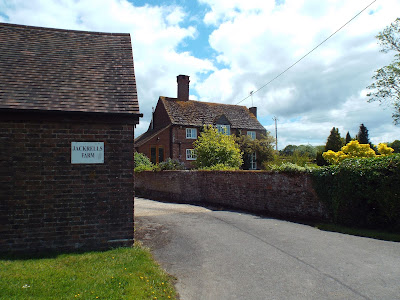 |
| Jackrells Farm House |
 |
| A Bendy Lane |
 |
| Some Parsleys are extremely poisonous |
 |
| Honeysuckle |
 |
| Yellow Archangel |
 |
| Butchers Broom |
 |
| Small Leaved Lime |
 |
| Field Maple |
 |
| Blurry but you can tell what it is ;-) |
 |
| Sycamore |
 |
| The View to Chanctonbury Hill |
The following documents and maps were all provided by Joan.